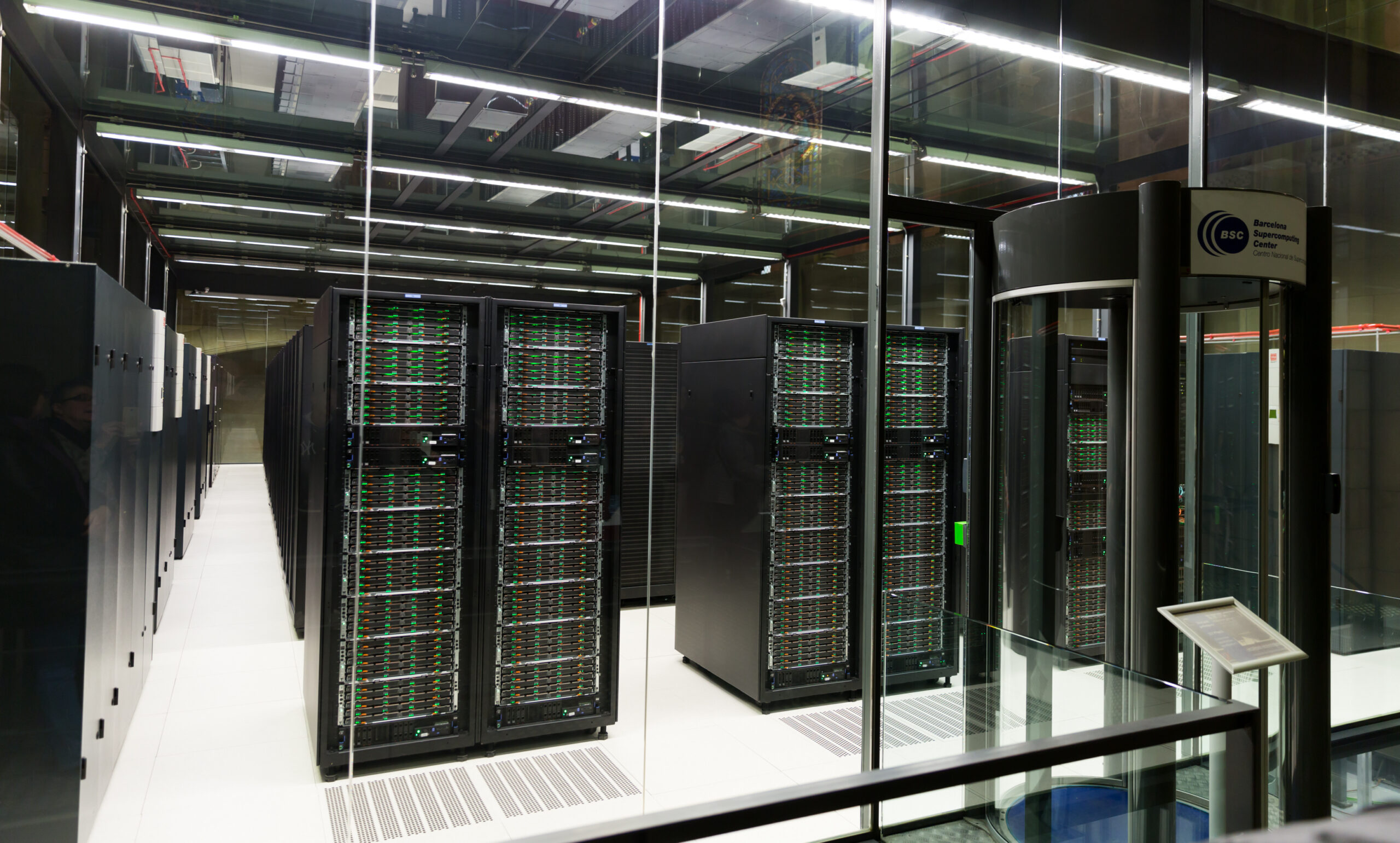
Current challenges in HPC

As High-Performance Computing (HPC) systems advance towards exascale performance and beyond, their growing computational power comes with significantly higher energy demands.

Improving energy efficiency is no longer just an operational concern — it is a key enabler of Europe’s digital and green transition.

SEANERGYS addresses this challenge by developing advanced software technologies that optimise how energy is monitored, managed, and utilised in large-scale supercomputing systems.

By enabling smarter energy management, SEANERGYS supports:

  • Sustainable supercomputing
  • Scientific discovery
  • Industrial innovation
  • Societal progress across Europe

Project Objectives & Expected Impact

SEANERGYS focuses on four key objectives:

Reduce energy consumption of real-world HPC and AI workloads

Improve system resource utilisation across supercomputing infrastructures

Increase overall system throughput

Optimise response times, enabling more research output per unit of energy

Towards Greener, More Powerful Supercomputing

SEANERGYS ultimately aims to deliver more scientific and industrial results per unit of energy consumed. By doing so, it supports Europe’s ambition to build green, powerful, and globally competitive supercomputing systems. Read more about Europe’s efforts in HPC.

Maximising the Value of European HPC Investments

By reducing energy waste and operational costs, SEANERGYS helps maximise the value of Europe’s investments in high-performance computing (HPC) and artificial intelligence (AI) infrastructures.

The project contributes to:

Sustainable high-performance computing

More efficient research and innovation

Stronger European leadership in HPC and AI technologies