
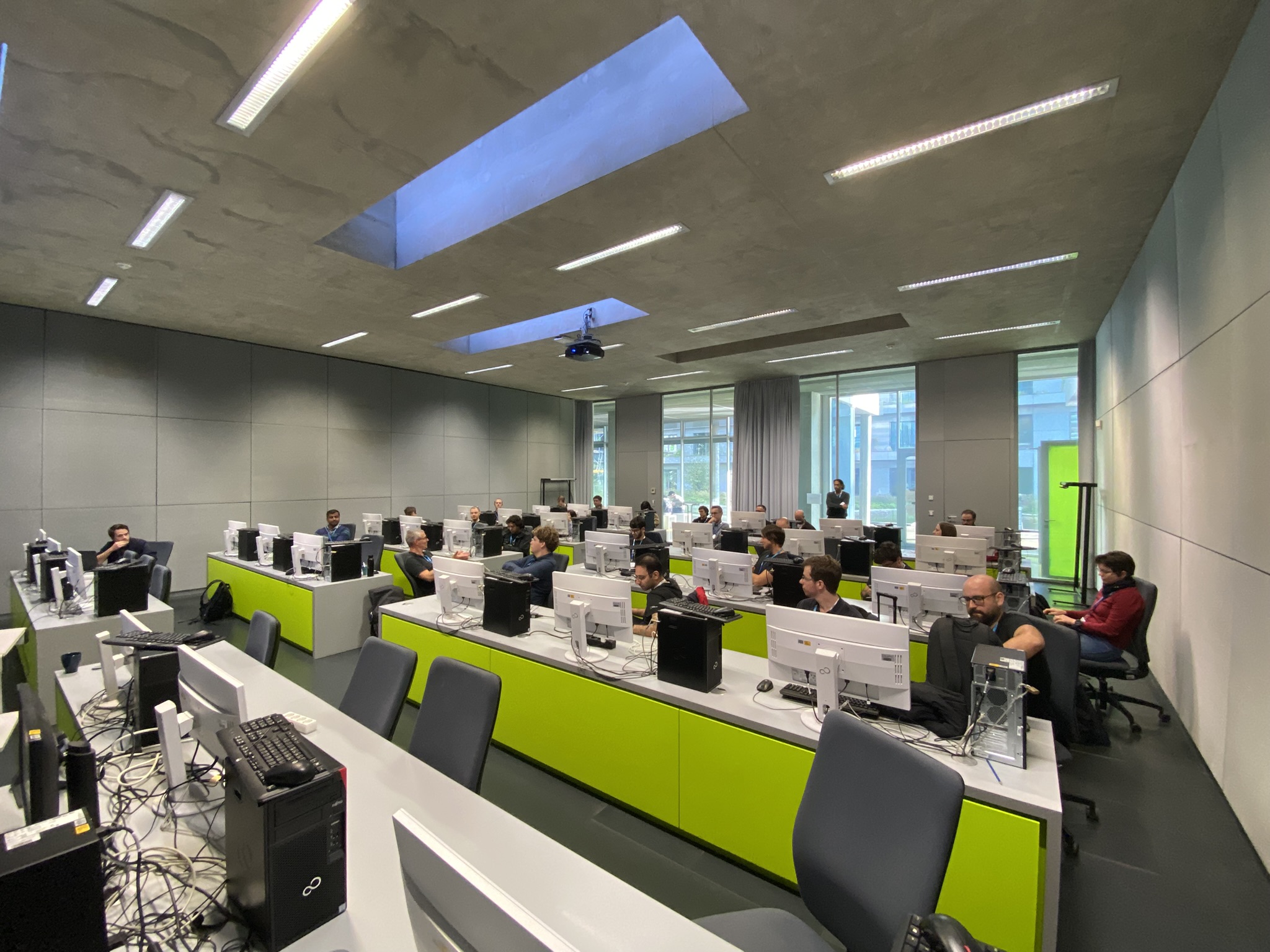
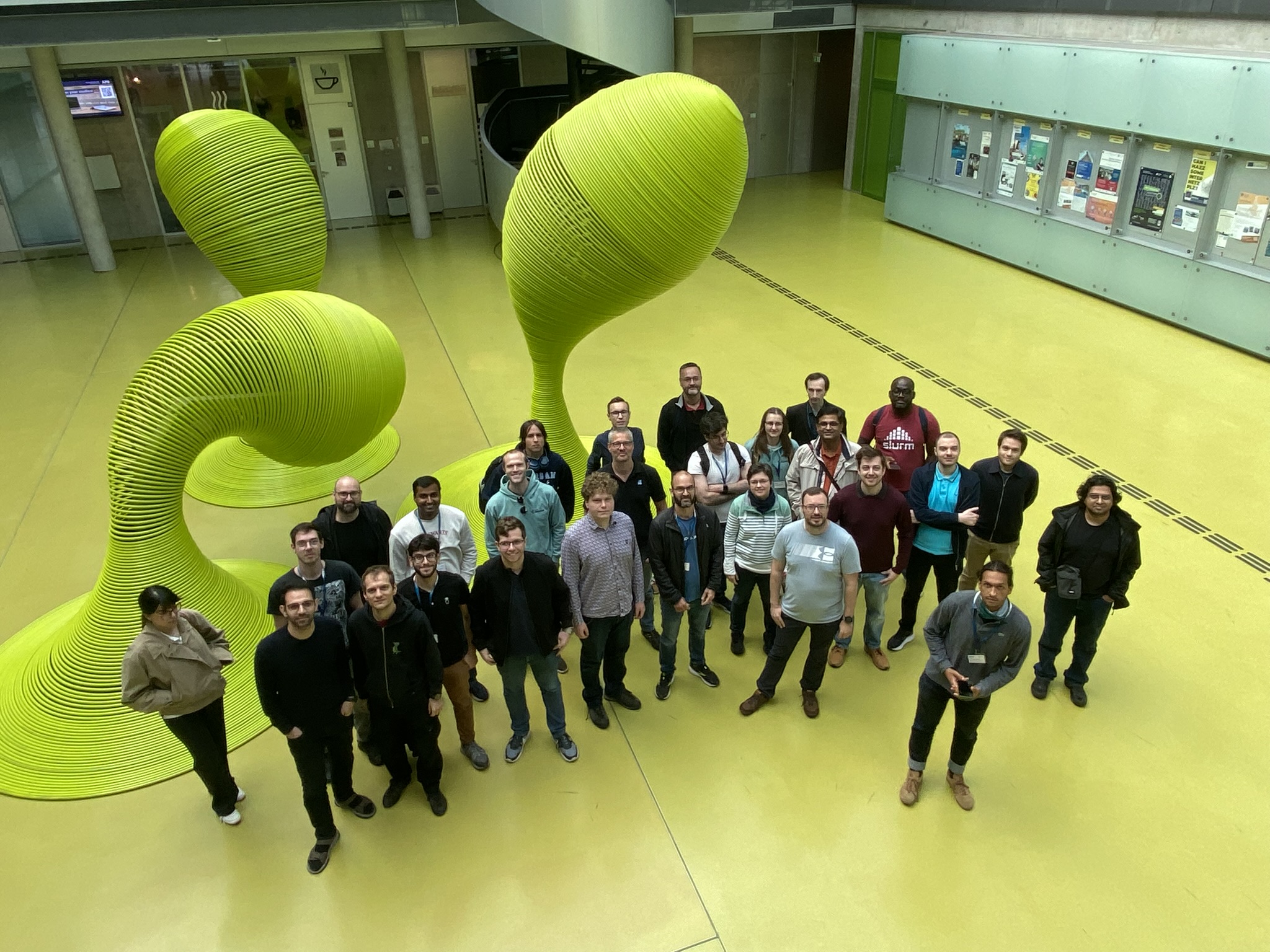
From 14 to 18 September, around 30 participants from across Europe came together at the Technical University Dresden for a five-day SEANERGYS hackathon. Representatives from 14 partner organisations worked jointly on the integration of the different software components developed within the project.

The hackathon was an important step towards the initial SEANERGYS software release planned for the end of November. The main purpose of the event was to bring the developers of the different components together and provide a focused environment in which open technical questions could be discussed and solutions could immediately be implemented, tested and refined. Many of the integration challenges involve interfaces between components developed by different partners. Working in the same location allowed these questions to be addressed through short feedback cycles instead of a sequence of separate meetings and development iterations.
Five Workstreams to Cover the Main Technical Areas

SEANERGYS Data Plane

The SEANERGYS data plane provides the core infrastructure for communication and data exchange between the software components. During the week, the participants worked on defining and implementing the protocols and message formats used by the different communication partners. Data-plane implementations currently exist for Rust, C, C++ and Python. An important result of the hackathon was the introduction of automatic generation for the C and Python implementations.

The latest development versions were continuously deployed on the LuxProvide (LXP) testbed. This made it possible to adapt and test several components against the current data-plane implementation, including the Access Daemon (AD), which collects monitoring data; the Telemetry Collector (TC), which retrieves data from the AD and publishes it to the data plane; a naming service for discovering metrics and endpoints; a database daemon; and the LLview visualisation system.

AI and Data Analytics Components

Work on the AI and data analytics components covered both data provisioning and the integration of the first models into the project’s AI production environment. The group discussed which monitoring and system data are required by the different AI models and how these data can be made available in a suitable form. A practical export path based on Parquet files was established as one way of providing training data to the AI workflows.

The discussions also exposed remaining gaps between the data required by some models and the data currently available through the monitoring infrastructure. One example is MPI-related statistics, which are intended to be used by at least one of the models but can only be supplied once the corresponding Access Daemon plugin is developed. Identifying such gaps is an important part of the integration process, as it makes the remaining dependencies between monitoring, data provisioning and AI components explicit.

Testing and Continuous Integration

The testing and continuous integration workstream developed and demonstrated a test harness that can deploy Flux and other required software as part of a CI run. This enables developers to test not only a software component in isolation, but also a Flux installation and actual Flux jobs in an automated CI environment. This provides an important foundation for repeatable integration testing as the project approaches its first release.

Visualisation

In addition to the existing 3D model of the Karolina HPC system at IT4I, a new model of TU Dresden’s Barnard HPC system was created in the workstream visualisation. The Blender-based visualisation was also adapted to the latest version of the data plane, allowing it to consume information from the evolving SEANERGYS software stack.

Flux

Flux is the resource and job management system used in the SEANERGYS project. In this workstream, work focused on retrieving information from Flux and making job lifecycle events available to other SEANERGYS components.

Five Days of Intense Collaboration

The hackathon took place from Monday afternoon to Friday lunchtime, bringing together developers, system experts, and application partners for a week of hands-on integration work.

Daily Coordination and Technical Collaboration

Each day began with a brief planning session and concluded with a wrap-up meeting. These regular checkpoints helped participants coordinate activities, share progress, and address technical challenges requiring input from multiple components or partner organizations.

Between the scheduled sessions, participants worked in smaller teams and frequently formed ad hoc discussion groups to tackle specific integration issues. This flexible way of working enabled rapid problem-solving and close collaboration across different workstreams.

Informal Exchange and Knowledge Sharing

A significant share of the collaboration happened outside formal meetings. The coffee and snack area quickly became a central hub for spontaneous technical discussions, where participants could clarify questions, compare approaches, and continue conversations in an informal setting.

Participants also had the opportunity to visit TU Dresden’s local data center, the LZR, gaining valuable insights into the infrastructure operated at the host site.

Social Activities and Networking

The intensive technical program was complemented by several opportunities for informal exchange and networking. Throughout the week, participants shared lunch at the university canteen and continued discussions during informal evening gatherings.

Additional social activities included:

  • A welcome dinner near Dresden’s Frauenkirche
  • A choice between a guided tour of Dresden followed by dinner or an excursion to the Bastei in Saxon Switzerland

These activities provided valuable opportunities for participants to build relationships and continue exchanging ideas beyond the working sessions.

From Prototypes to Integrated Software

By dedicating several days to collaborative development and integration, the hackathon accelerated progress on a number of key topics. Many discussions that had previously focused on interfaces and individual prototypes were advanced toward jointly tested software components.

The outcomes of the week now feed directly into the remaining integration and testing activities leading up to the project’s first software release, scheduled for the end of November.