
As Europe moves towards increasingly powerful HPC and AI systems, the challenge is no longer only to provide more compute performance, but also to operate these systems in a sustainable and energy-efficient way. Within the SEANERGYS project, Work Package 1 (WP1), “Requirements and Global Architecture”, provides the foundation that makes this possible by defining the common architecture, interfaces, requirements, and evaluation methodology for the complete software suite.

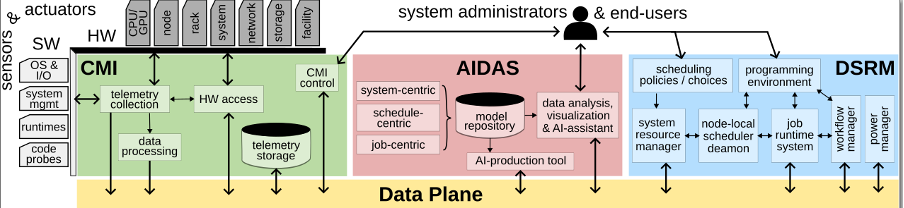
The overall goal of WP1 is to ensure that the different project components developed by the consortium evolve into a single, coherent, production-ready solution. SEANERGYS combines three major technical pillars: the Comprehensive Monitoring Infrastructure (CMI), the AI-based Data Analytics System (AIDAS), and the Dynamic Scheduling and Resource Management system (DSRM). WP1 is responsible for defining how these components interact, what information they exchange, and how they collectively contribute to improving the energy efficiency and resource utilization of European HPC and AI systems.
A major activity during the project has been the collection of requirements and use cases from HPC centres, system operators, software developers, and user communities. Based on this information, WP1 has identified the operational needs, constraints, and priorities that drive the design of the SEANERGYS software stack. These requirements form the basis for the project’s key performance indicators, acceptance criteria, and deployment strategy.

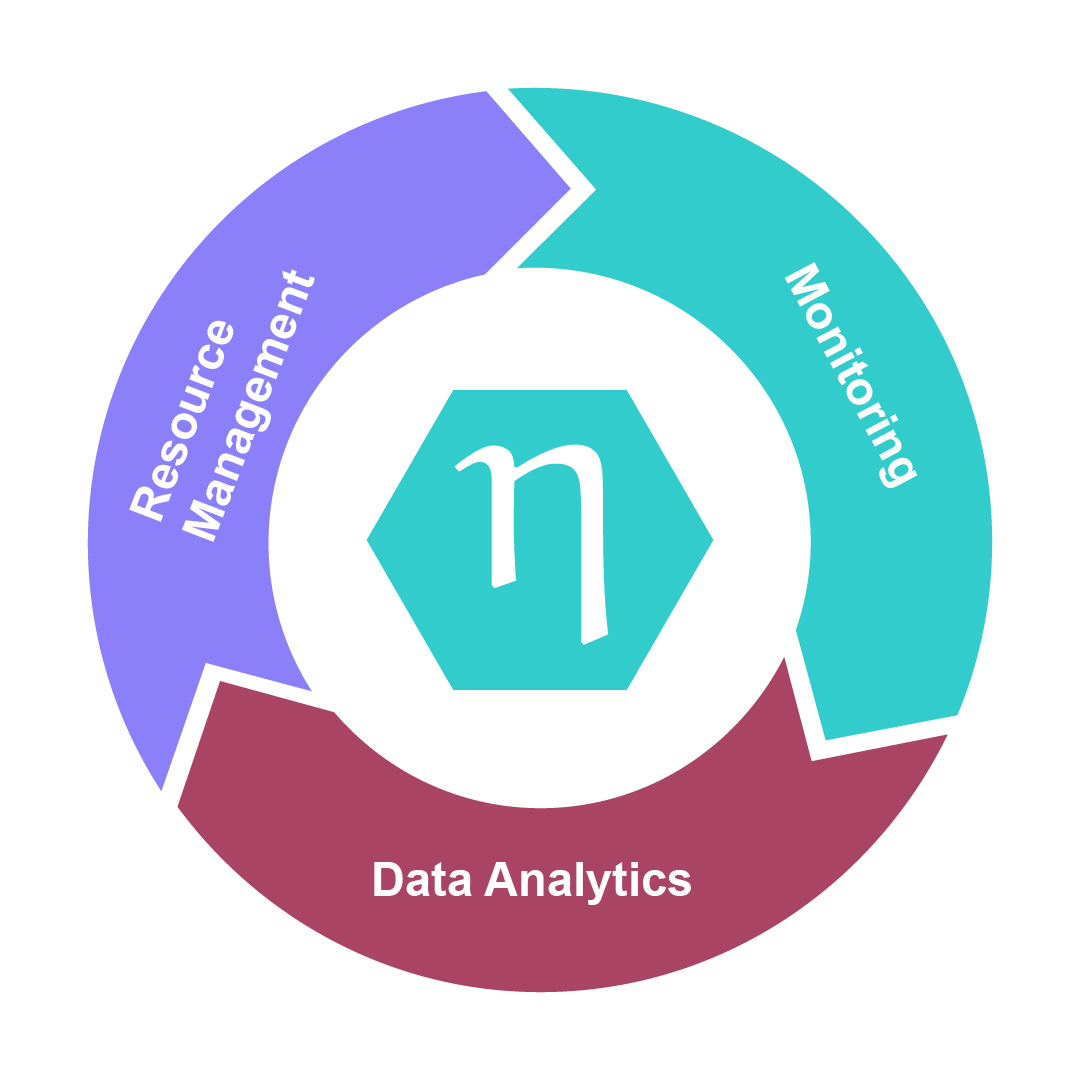
Another central achievement of WP1 so far has been the development of the global system architecture. The architecture is built around a continuous optimization loop (see Figure 1) that combines monitoring, analytics, and adaptive resource management. Data collected by monitoring infrastructure is made available through common interfaces and data models, analyzed by AI-driven methods, and used to guide scheduling and resource management decisions. This approach enables coordinated, energy-aware operation of HPC systems while remaining flexible enough to accommodate future hardware platforms, software frameworks, and workloads.

Currently, WP1 continues to guide the evolution of the architecture, with the current state being shown in Figure 2, and supports the integration activities across all technical work packages. Particular attention is being given to interface definitions, common data standards, evaluation workloads, and architectural decision processes that ensure long-term interoperability and maintainability of the software stack. These activities are crucial to achieving one of the project’s overarching goals: delivering a production-quality European software ecosystem for energy-efficient supercomputing.

The work is led by Prof. Martin Schulz from Technische Universität München together with partners from across the consortium. Through this collaborative effort, WP1 helps ensure that SEANERGYS develops not as a collection of individual tools, but as an integrated solution capable of supporting the next generation of sustainable European HPC and AI infrastructure.